
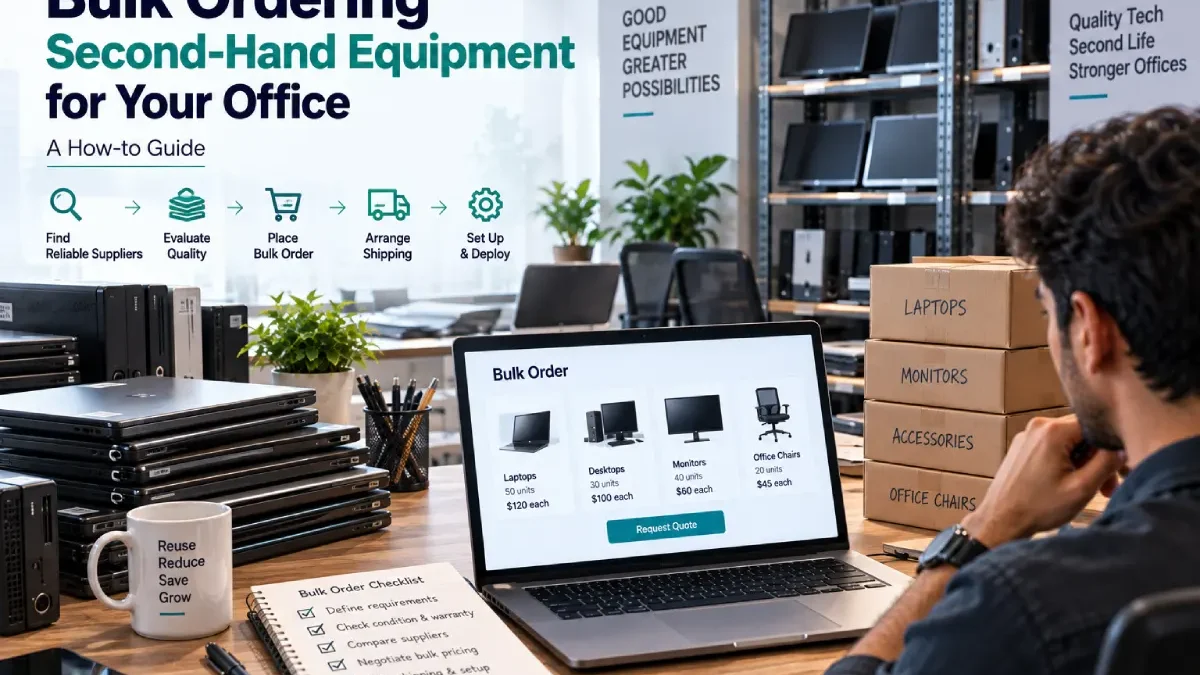
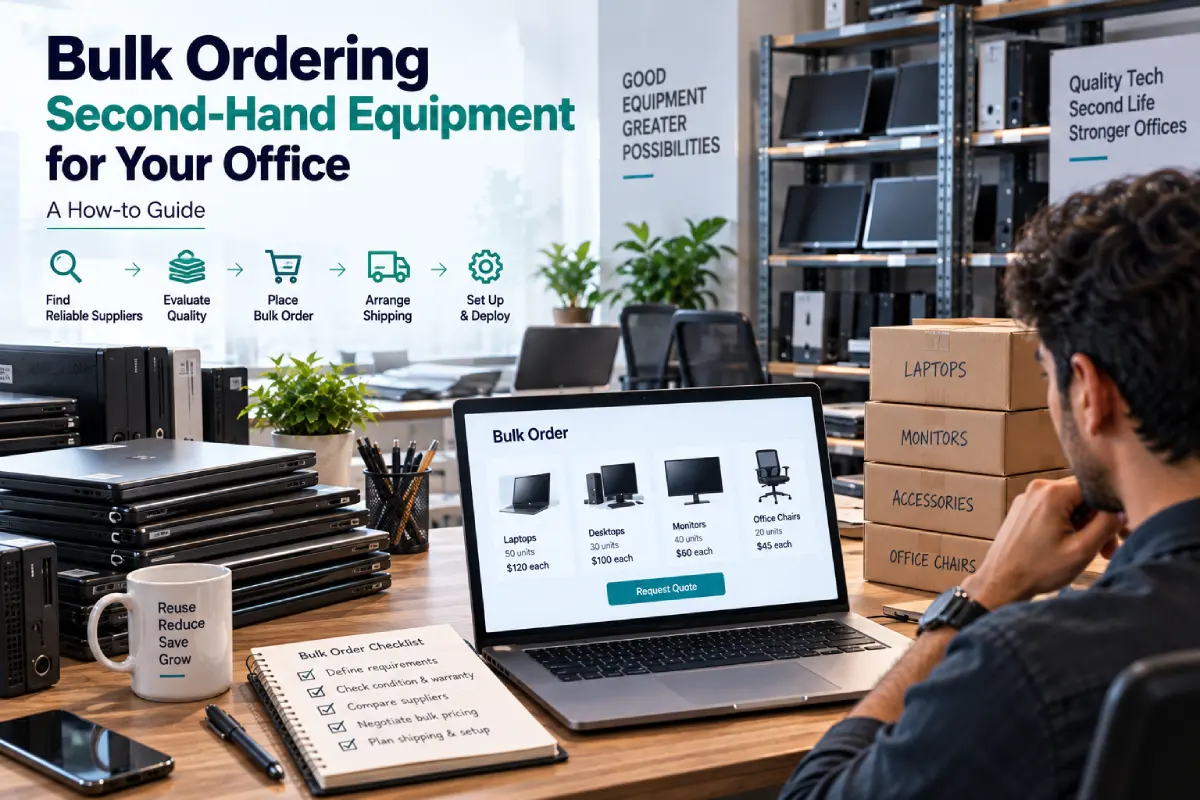
Second-Hand Equipment for Your Office
Setting up an office can quickly become expensive. Desks, monitors, computers, chairs, printers, and other essentials all add to the initial cost, particularly when you are furnishing a workspace for several employees at once.
Buying second-hand can reduce that expense while giving useful equipment another lease on life. However, bulk purchasing requires more planning than picking up a single used desk or laptop. You need to consider condition, compatibility, transportation, and whether the deal genuinely represents good value.
Table of Contents
Create a Detailed Equipment List
Before browsing listings, establish exactly what the office needs. Divide purchases into essentials and items that could wait until the business has settled into its new space. For technology, record the minimum specifications required. If employees use demanding software, inexpensive older computers may struggle to provide adequate performance. For furniture, note measurements so you do not accidentally purchase 20 desks that overwhelm the available floor space. A clear list also reduces the temptation to buy equipment simply because the price looks attractive.
Look Beyond Individual Listings
Buying items individually can become inefficient when furnishing an entire office. Instead, search for sellers offering equipment in larger quantities. Businesses relocating, renovating or closing premises sometimes sell furniture and technology together. Office clearance companies and used equipment specialists can also be useful places to investigate.
When buying computers or monitors, ask whether all units are identical. Matching equipment can simplify setup, troubleshooting and future maintenance.
Inspect Condition Carefully
Second-hand does not necessarily mean poor quality, but condition can vary significantly. Request recent photographs and ask sellers about obvious damage, missing components and previous usage. For electronics, establish whether equipment has been tested. Check that computers include any components you expect, as seemingly inexpensive machines can become less attractive once you have purchased replacement drives, memory, power adapters or peripherals.
Even office chairs deserve inspection. Check adjustment mechanisms, wheels, armrests and upholstery rather than judging them solely on appearance. Having great quality won’t make any difference if you and your employees are uncomfortable.
Calculate the True Purchase Cost
The listing price is only part of what you may ultimately spend. Factor in replacement parts, cleaning, refurbishment, and transportation. Moving a bulk order of desks, chairs, or computer equipment can be a significant logistical task. If the seller cannot deliver, Shiply shipping services can be one option to consider when researching transportation for larger quantities of equipment. Whichever method you choose, provide accurate information about the number, size, and type of items involved. For fragile technology, make sure appropriate packing and handling arrangements are discussed before collection.
Check Technology Before Deployment
Used computers should not simply be connected to your company network and handed to employees. Have them inspected and properly prepared first. Storage devices may need to be securely erased, and operating systems, security updates, and software should be configured according to your organization’s requirements. This is also an opportunity to check hardware performance and identify any units requiring repairs. Keeping an inventory of serial numbers and specifications can make managing the equipment easier later.
Leave Room for Spares
When the price is reasonable, buying a few additional matching items can make sense. A spare monitor, chair, or computer can be useful when something fails, or a new employee joins unexpectedly. The goal, however, is not to fill storage rooms with equipment you may never use. Focus on items that are difficult to source quickly or that your business relies on every day.
Make Second-Hand Purchasing Work for Your Office
Bulk buying used office equipment can offer substantial savings, but the lowest advertised price is not automatically the best deal. Condition, suitability, transportation, and potential refurbishment costs all need to be considered.
Approach the purchase with a detailed list, inspect equipment carefully, and calculate the complete cost before committing. Done well, buying second-hand can create a functional, well-equipped office without requiring a new-equipment budget.